Showing posts with label family. Show all posts

Thursday, 8 December 2016

5 Ways to Embrace a Dutch December

December in the Netherlands means ferrying the children to school in near-darkness and evenings that draw in early. The temperatures take a nosedive and there’s every chance that snow will form a blanket over this little land. But a Dutch December certainly doesn’t spell doom and gloom. Winter in the Netherlands can be a lot of fun – if you are determined to embrace the colder, grey days and the dark evenings.

Here are 5 ways you can turn December into a month of gezelligheid and create a treasure trove of memories at the same time.

1. Embrace the Darkness

Candles and lights are everywhere at this time of year and with a little imagination you can make family time very special indeed whilst the dark evenings close around you.

Make lanterns or glass pot candleholders and take an evening walk in your neighbourhood, or simply let your children grab torches and go for a stroll after dinner. Children love the excitement of exploring in the dark.

Alternatively, ask your children to help you decorate a tree in your garden or your balcony with twinkling, festive lights.

Eat a family meal by candlelight. This is something that has become a bit of a tradition on winter solstice for my family, a way of marking the year’s shortest day. You could also read a story together by candlelight. Little faces light up when the candles come out.

Or you could venture out and attend one of the many mesmerising kaarsjesavonden in the region: Gouda, Zoetermeer and Voorburg all have an evening where the shopping streets  and shops are lit up with hundreds of candles.


2. Embrace the Cold

The Dutch are ice-skaters extraordinaire and you certainly can’t beat them, so join them. When the temperatures drop to below freezing, listen carefully and you can hear the sound of millions of ice skate blades being sharpened. Grab some ice skates for your children and yourself and head to the nearest frozen canal or pond and get skating. You could also use a garden chair to help you around the ice if skating really isn’t your thing – head to a frozen body of water and you’ll see what I mean.

If winter doesn’t quite play ball and the canals don’t freeze solid, head to one of the many skating rinks that open or appear at this time of year.

Similarly, a little snow doesn’t deter the Dutch from going about normal business. Many (but certainly not all) will ditch their bike for a sledge. The dunes are a place with toddler-sized hills for sledging. My children’s excitement is immeasurable when they are pulled to school and back sitting on a sledge. Head for the hills for some sneeuwpret! (Easier said than done here I know).

You can also keep warm by gathering your family around an outdoor fire basket, the children sipping hot chocolate and munching on festive biscuits and the grown ups indulging in a little Gluhwein, whilst roasting marshmallows over the flames. Gezellig!

3. Embrace the Winter Feeling

Instead of shutting down during the cold, dark days of winter, places like the Efteling embrace winter warmly like a good friend. The Dutch theme park transforms into a winter wonderland at this time of year; there is a skating rink and a cross-country skiing course (langlaufbaan) as well as live entertainment and of course hot chocolate in abundance.

Similarly the Spoorwegmuseum in Utrecht transforms into a winter station paradise from the 20th December, with music, a skate rink, a carousel and a chance to toast marshmallows outside on open fires.

There are also numerous kerstfairs across the Netherlands to enjoy too - like this one at Marienwaerdt.

4. Embrace Your Family

Cold days, dark evenings and a month of festivities leaves lots of days for quality family time. Make the most of snuggling together and watching a Christmas movie; read stories together on a mound of cushions and blankets or share tales from your own childhood winters or Christmases. Have a family games evening.

Bake mince pies, pepernoten or New Year treats with your children. Eat oliebollen together. Make and decorate a gingerbread house – and watch as your children demolish it piece by delicious piece.

Use this time of year to take silly photos, get your children behind the lens whilst you don a Santa hat. Be creative, have a little fun.


5. Embrace Good Causes

December is a perfect month for having a good clear out. It’s the season of giving, and receiving. Encourage your children to sort through their toys and donate those they no longer play with. Clear out wardrobes and donate clothes to worthy causes. Donate food to the local food bank.

Show your children the meaning of this season, and get your children thinking about who they could help at this time of year. Maybe a family friend or relative has just had a baby and would welcome a home cooked meal from your family. Maybe your children could clear the snow from an elderly neighbour’s path.

December is a month when animals can benefit from good turns too – for example by making food holders, fat balls or cakes for the birds.

There are lots of ways you can help at this time of year and get your children more involved in a less commercial side of the festive period.

Embrace December – and squeeze every last drop of gezelligheid out of the last month of 2016.

Sunday, 21 June 2015

Celebrating A Trio of Fathers

This year, contrary to last year, and more years than I care to think about before that, I will actually get to spend Father's Day with my dad. In fact, all going to plan, nearly all the dads in my immediate family's life will be together and that has never happened before.

Expat life is like that - it means being apart for days you should be together.


Last year we (my sons, my husband and I) had a beautiful Father's Day and I sat thinking how great it would be if next year it could be spent with my dad and my father -in-law too. And then life carried on until a few months ago when suddenly the idea I had last year sprang to mind.

I sent an email to my stepmother, who booked flights quicker than you can say, "Happy Father's Day" and the date was etched in stone on the calendar. And that day is now here.

We have a fun afternoon planned. Three dads. Three grandsons. Three sons. One family. One celebration of fatherhood. We'll be making the most of a unique occasion.

I am so pleased that we get to spend this day together.

Wishing all you fathers out there a wonderful day in the company of your families.


OneDad3Girls

Monday, 2 February 2015

Expat Life: Loving and Leaving Where You Live

I have just finished reading Global Mama by Melissa Dalton-Bradford (you can find a review here) and all the way through the book I was struck by the sense of 'home'; her family's ability to set down roots wherever they ended up living. They didn't just live physically in new countries, new places, new houses; they lived with their heart and soul and I had the feeling that every place they left meant leaving a little part of themselves there. Truly global living.


Reading Dalton-Bradford's account of living in Norway and the cultural differences they experienced when the family made a move to Paris made me think about my own sense of home.

I take for granted now that I live in the Netherlands, that I live in a Dutch house, in a Dutch street surrounded by locals. But what does that actually mean? It's the little things around us that make somewhere unique to live. It's the secret corners, the special items of furniture or memorabilia that travel with us, it's the normality of our days in a place. It's the waves from neighbours, the familiar faces scraping ice from the cars parked in the street in winter.

As each day passes in a house, in a town, in a country we take everything around us more and more for granted. Nothing seems particularly special anymore because we see, touch or pass it every day. Only by leaving a place do we see it's true place in our heart. Only by moving on do we appreciate all the little things that make a place special, make a place our home. And when you are not constantly on the move it is easy to forget all that.

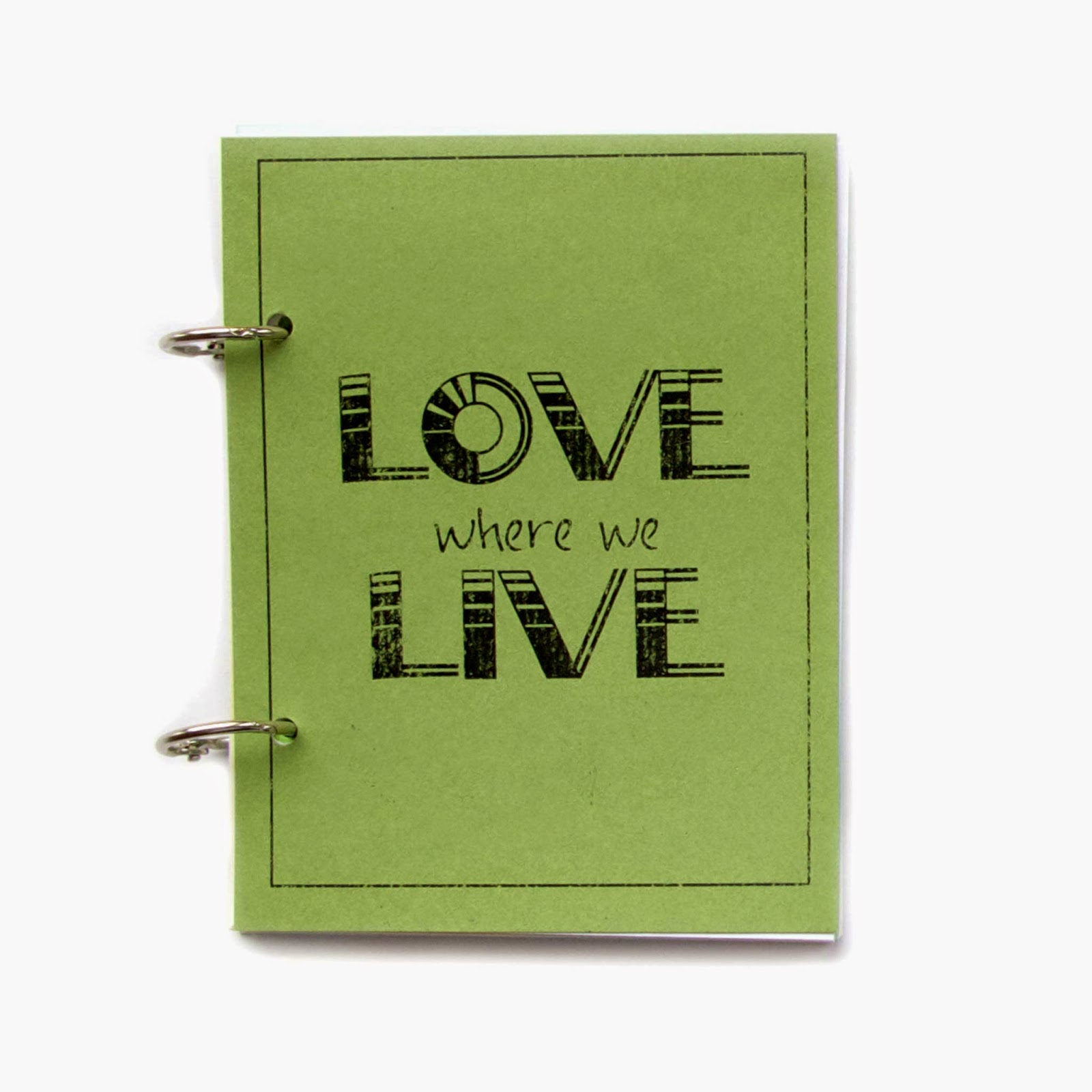
Reading Global Mom reminded me that I was busy with a Love Where We Live journal at one point but never finished capturing the place I call home. A journal about where you live is never really finished of course - things change, you redecorate, you renew, you refresh rooms - and more importantly every day you live in a home you make new memories. But I was busy capturing the essence of the place I call home. I was busy with photos of the room we gather to eat, where we scrub our teeth, where the children play.

What makes a home a real home though is not the wallpaper, the curtains you've meticulously chosen to match the sofa, nor the well thought out shade of the woodwork's paint, but the people you share your home with.

Home is made special by the things you do together - the Friday night rituals, the lazy Sunday morning breakfasts, the ordinariness of the morning rush out of the front door. What do festive holidays look like in your home? How would all that change if you lived somewhere else? Expat life is certainly about change - from the minor to the major, from the little day to day things to life changing events. And in all that our home is the foundation, it holds things that are familiar and dear to us. It holds things that capture our memories, whether we realise it or not.

There are things scattered around my Dutch home that I brought with me from England and every time they catch my eye I am cast back to a previous life, even if for only a brief moment.

There are even special memories in the choosing of a house - the memories of picking the house that we currently live in have emotions intrinsically entwined around them. We bought a home for our future. We bought a place we could make our own, put our stamp on. Then, back in 2002, there were two of us. Now there are five of us. We have grown our family in this house. As my Love Where We Live journal reminds me the house I live in, the place I call home is special because:

"We are growing into beautiful people here."
Each day we are growing as a family, and this home is the place where my three sons have grown from babies into toddlers and are growing into school-going boys. It's their base, the place they feel safe and secure. And whilst I was reading Global Mom, it became clear to me that this house we live in is a shell for our family, for our lives, but what goes on inside will be the same wherever we should lay down roots, whichever house, street, town or country we should live in. We will take something of this place with us when we eventually move, not the physical stuff, but the emotional and cultural parts of life here in the Netherlands.

Moving away from this Dutch street, this town, or even this country wouldn't take away the memories, the love that has encased us in our home over the last twelve years, the people we have become living our Dutch life.

Imagine tomorrow having to leave the place you currently call home -  what little part of you would you leave behind? What would you take with you from the life you have lead there to your new home?

It strikes me that the furniture would all be replaceable, there'd be no tears shed about leaving the carpets we spent time deliberating over behind, but the moments we have spent getting on with life in our home would be irreplaceable, unique. These moments are currently the daily occurrences that seem so average, so ordinary and uninteresting -  the day to day that hardly seems worth noting in a beautiful journal. But I am off to do just that - because I know one day I will realise the value of all these family moments that make up day to day life in our average Dutch home in a Dutch street, in the middle of the Netherlands. I will come to realise that we have lived in this house with our hearts and our souls. And I will also realise that we will leave a little of ourselves in this home when we leave it.

Monday, 5 January 2015

Expat Life Means Throwing Your Plans Out the Window

It won't be news to anyone but life doesn't always turn out like you expect it to. If someone had told my seventeen year old self that I would end up living in the Netherlands with a Dutch husband and three children who are way more Dutch than they ever will be British, I would never have believed them. I would have been intrigued, but convinced? I don't think so.

Whilst I was making plans for my future, fresh out of university with a degree in European Studies, someone, somewhere was sniggering saying, "Well, I doubt you'll be needing any of that - maybe you should have tried learning Dutch. That's a language you will be using daily when you are 27." But how was I to know?

Expat life is planned for some, it sneaks up on others. Either way, it probably means life as you envisioned it doesn't quite become a reality. Expat life changes things - and sometimes that means a huge adjustment. Expat life can throw a spanner in the works. All the things you imagined for yourself in life can turn out so differently, in the blink of an expat eye.

It's a feeling I touched upon in a chapter I wrote about my Dutch wedding in the Dutched Up!: Rocking the Clogs Expat Style anthology. I had visions when I was younger of me trying on wedding dresses with my best friend at my side. I always figured my mother would also be a part of that build up to my wedding day. Together we'd be sipping bubbly while trawling through a range of dresses to find the perfect one for my big day.

My final choice of wedding dress
The reality was very different. Both my best friend and my mother were in England and I was here in the Netherlands. I actually put off looking for a dress for a while, and I guess it should have been one of the first things on my mind. At the time it wasn't a conscious decision to keep putting the visit to the bridal shop off, but looking back, I understand why I was more reluctant than I should have been to try wedding dresses on. It's the little things that suddenly slap you in the face and make you realise that expat life means sacrificing some things to gain others.

Having my first child was another reminder of how expat life changes things. In a non-expat life I had visions of my mother waiting outside the delivery room, eager to see her grandchild. I guess I figured I would have her to lean on, as the voice of experience, whilst I was pregnant in a different country. The reality was a million miles from the ideal. If I look back now I can't say whether there would have been more interest in my children from my mother had I not left England. It's a question I will never have the answer to, but I do know that my expat life changed our relationship for the worse. And I can't change that.

When you opt for an expat life things change. It is inevitable. I wouldn't change my decision to move overseas for all the tea in China, or all the fish 'n' chips back in England. But maybe, I could have been more prepared for the changes that expat life brings about. I don't mean the daily, practical things; I had envisaged those. I mean how expat life changes how the little things turn out, how it challenges the plans and visions you had for yourself, how it strains relationships with those left behind. How it puts turns in the road you hadn't seen coming.

To thrive as an expat I've needed to throw everything I saw for my future self out the window, and start with a clean slate. Make my plans from scratch. I've had to deal with the unexpected, and recover from being blindsided many times. Expat life means a pay off. That is the only certainty.

But I'm glad I've had the chance to find my way through my expat life. The journey was worth it.

Monday, 12 May 2014

The Tales That Bind A Family

I was at the funeral of my great aunt and, like most farewells of this form I guess, there was a melancholy air about us. As a contrast to that feeling it was heartwarming to hear the many stories about my great aunt from my dad and his brothers and sisters.

Over breakfast on the morning of the funeral my stepmother threw out the question,

"What is your earliest memory of your aunt?"

Photo Credit: Krzysztof (Kriss) Szkurlatowski
Mine was of her wedding day. I was a young child. I remembered a far happier day than the one we were gathering for that day. My dad's earliest memory was sitting with his aunt and some of his brothers in front of the 'wireless', an old radio. He recalled that she was their regular babysitter. A wonderful storytelling babysitter, enchanting and reeling them in with fantasy tales, captivating her nephews with stories of rich relatives in far off lands.

During the funeral service the priest shared his recollections of his first meeting with my great aunt, and how she ensured he was whipped into shape for his role as her parish priest. She played a huge role in the parish, despite being less than healthy for as long as I can remember.

After the service, in a local hotel, there was a board full of photos. Photos taken of her happy life. A life I realised I knew very little about. Smiling faces, people wrapped in loving arms in various locations, undertaking various activities. Happy days, happy years filled with family, fun and adventures.

In a few short hours I learned more about my great aunt than I'd heard in the forty years before. Funerals do that to people - bring back memories of happier times gone by, memories of the essence of a person. I also got to hear the story of how my grandparents met. A wonderful, simple meeting that was to lead to a marriage that has lasted 63 years and which is still going strong.


These stories, none of them earth moving or spectacular in the face of mankind's achievements, not world changing by any means except to those playing the starring roles, made me smile. I'm going to write them down and share them in years to come with my sons, so they know where they have come from. These beautiful little tales are the stories of how we came to be; how one generation turned into another. These stories give us our roots, give us a sense of our family history. They pass our culture and traditions on from generation to generation. They need to be cherished, to be shared with the next generation, to be remembered.

Our memories, the memories of our parents and our grandparents, are tied together. Bound together they make up a picture for our children of the family they belong to.  And I feel that having children born in a country different to the one I was born in, living away from their extended family, makes these stories all the more important. These stories connect our cultures. They connect family history to our family now.

These stories connect us, even when we live our life away from the rest of our family, even when we are expats.


So ask to hear these wonderful tales now; don't wait to hear them in a somber moment when everyone is reflecting on what was. Ask to hear those stories in happy times, direct from the horse's mouth. And capture them for your children, and the generations beyond.

Monday, 5 May 2014

5 Ways Expat Life is Like Moving into Downton Abbey

Downton Abbey aka Highclere Castle
Photo Credit: Darren Deans
I'm currently watching the latest series of Downton Abbey, sneaking in an episode here and there after the children's bedtime routine is finished. It struck me watching Tom Branson, the chauffeur who marries into the aristocratic Crawley family,  and his eternal and internal struggles to fit in with his in-laws, that expat life is a similar experience. Here's how.

1. Thinking Before Speaking
Tom speaks English, but not the same English as his mother and father in-law, Lord and Lady Grantham and their offspring. He needs to mind his p's and q's, think about his word use and his inflection. Like us expats, he needs to think about everything that comes out of his mouth if he doesn't want to stand out, make a show of himself or make himself a target of ridicule. When you live life in a foreign language you truly know how it is to think before you speak.

2. Testing Beliefs
An Irish socialist in the ranks of the English aristocracy is hardly a match made in heaven. He desperately wants to narrow the gap between the rich and the poor, is anti-British establishment and holds left wing, republican ideologies. However, his survival at Downton means watering down his own beliefs and political opinions, or at least how he expresses his views. He learns over time to keep his mouth firmly closed or risk stirring up animosity, putting his wife in the middle of unwanted family conflict. He has to learn to balance his political views and Sybil's happiness. In his own words,

"Sometimes a hard sacrifice must be made for a future that's worth having."

Many expats find their belief or ethics systems or values tested to breaking point when they move to a new country. The status quo in a foreign country often presents a personal or cultural conundrum. Ideologies, political beliefs, religious views and freedoms differ across the world and expats have to learn to thrive in the face of internally conflicting or unfamiliar laws or norms, even when it goes against everything they believe in.

3. Making New Friends
Tom finds himself in a completely new social circle, one forced upon him by his new status marrying in to Downton Abbey's well-to-do family. They are not people he would normally be dining and exchanging pleasantries with. And so it is too with expats, thrust into a new social circle by default because of a new expat location. Expats often find themselves in a room filled with people they wouldn't necessarily be socialising with in 'real life'. They reach out to people they wouldn't be friends with back on home turf.

Downton's Formal Dining Setting - the Scene for Many a
Discussion on Tom's Evening Attire
Photo Credit: Rachelle Lucas Flickr Creative Commons
4. Adapting to a New Culture
Tom was raised in a different world to that of his wife, Lady Sybil, and her family. He came to Downton Abbey as a chauffeur and we can safely assume there were no maids, butlers or footmen attending in his family home growing up. His background could not be more different than the world of formal dinner jackets, hunting and cricket that he enters when he marries Lady Sybil.

Daily, across the globe, expats find themselves living in an unfamiliar world to the one they grew up in, entirely different to their passport country or the one they were raised in. It means learning how things should be done, learning how others do things and adapting to a new way of living. Just like Tom, who after stoically refusing to conform to formal dinner attire for a long while, eventually gives in so that his attire ceases to be a topic of discussion. He also learns how to play cricket in order to keep his father-in-law happy and make up the numbers on the house team. He adapts to his environment, just as we expats do.

5. Staying True to Ourselves
Despite the changes that Tom goes through in order to fit in to his new home and life, he remains true to himself. He remarks to Matthew on one occasion that even if he learns cricket, goes fishing and hunting,

"I'll still be an Irish mick in my heart."

Tom carves his own role in the household, becomes an accepted, valuable, member of the Downton Abbey household despite feeling in his heart that he doesn't truly belong to the family nor any longer has much in common with the staff he used to serve the family alongside with. He makes himself essential nonetheless as manager of the Downton estate. He adapts, changes and makes a new life for himself, one he could never have imagined when he first arrived at Downton Abbey as a chauffeur.

And so it is with expat life. It changes us, in ways we could never imagine. We learn to adapt to our surroundings, to the people we live with, live with a new culture, a novel way of doing things, learn a new way to live our life. And that is true if we move to Downton Abbey or to a little unknown town in the Netherlands. In the words of Mr Carson, Downton's very loveable butler,

"What would be the point of living if we didn't let life change us?"
What indeed.

Thursday, 24 April 2014

My Mommy Hotspot Baptism

I am delighted to share that I have just started as a contributing author for Mommy Hotspot and my first post went live yesterday.


Mommy Hotspot is a website set up with the one aim of connecting mothers across the world (as well as giving a dedicated corner to dads). You can read articles about parenting, crafting and creating and entertaining as well as read product reviews. And I am thrilled to be a part of it!

My first article is on the topic of the Dutch and how they seem to have mastered the concept of a work life balance, much more so that some other countries. An article I shared on my Facebook page earlier in the week springs to mind.....

You can read A Dutch Lesson on Work Life Balance by visiting http://www.mommyhotspot.com/a-dutch-lesson-on-work-life-balance/. I would love to hear your thoughts, read your comments and appreciate you sharing the article if you enjoyed it.

I will be sharing my thoughts on parenting, especially overseas, raising boys and on the topic of highly sensitive children each month over on Mommy Hotspot. You can keep up with new posts on the Mommy Hotspot Facebook page, or by following on Twitter at @MommyHotSpot. I hope you'll join me over there!


Wednesday, 9 April 2014

The Farewells That are Forever aka When Expat Life Sucks

As you read this I am back in Britain attending a funeral. It is one of the hardest aspects of expat life - being away from family and loved ones at times of sickness and bereavement. I'm lucky that I can be back in England within hours. I know many expats have it much tougher (like my brother in the US) when they need to be back in their passport country, the place that is still home to those we care so much about.  Words I wrote last week ring in my ears,

"Normal life continues at home or away with all its ups and downs. Moving overseas does not mean there is no more drama in your life, or that you can escape what happens back 'home'. Sometimes it can actually make problems worse as solving issues back in your home country is harder. Expat life is not an escape from life."

When something bad happens that makes me want to go back to my birth country, it is never a question of just jumping in a car and heading off. Not like it would be if I still lived in England. Life as an expat means it's not straightforward to be there for loved ones the moment you are needed. It takes time. It takes planning. Travel needs to be booked. Emergency funds are needed. Logistics take over.

On top of that loved ones back 'home' inevitably say things like,  "don't feel like you have to come back" or "no one is expecting you to fly over for the funeral" or stronger still, "don't come, there's nothing you can do anyway." They are genuinely trying to make life easier, take a decision out of your hands. But I know in my heart if I can be there then I will. Expected or not. Easy or not.

Because on one occasion I couldn't be there, and it haunts me still seven years later.

This time I've headed back alone. My children need normal life here in the Netherlands to carry on. They don't need to be at a funeral. That sentiment is not expat related, it's just a parenting choice. Last week, as a couple my husband and I needed to think ahead, to juggle, to scamper around in order to make it work so I could get a flight back to England, stay overnight in Wales and fly back to the Netherlands the following day.

Whilst I was making plans last week so I could be in Wales today it struck me that there will only be more of these moments in the future. None of us are getting any younger.

I have been back to England on one previous occasion for a funeral and that time too I flew back alone. The news was out of the blue. It came as a hard hitting punch. It was heartbreaking to be there at the graveside but I wanted to be there for my family, to show I cared, even though I had been no part of the pain they had been through in the months and weeks before the end. Being there without my husband and my own little family was tough but it was no tougher an experience than not being present at my gran's funeral seven years ago. The absence that haunts me still, seven years later.

My first son has just been born, I was an emotional wreck, he had no passport, I was breastfeeding waiting for my milk to come in properly. And then I learnt that my gran has passed away. I had seen her in hospital a few months prior to her death; she'd had a stroke. It broke my heart to see her so different to the grandmother she had been to me growing up. Whilst I held her hand as she sat in her hospital bed I knew it was a possibility that I would not see her again. But I hoped. And as the new year rolled in the news did seem to be getting more positive. There was a glimmer of light, a hope of at least a part recovery. But the light went out. And I couldn't be at her funeral. Logistics. Timing. Expat stuff.

So I know in my heart, if I can be there, I will. The alternative is harder to bear.

Wednesday, 26 March 2014

5 Lessons I Have Learnt from the Dutch

This is the fourth and last title in this month's expat blogging link up - it has been so much fun and I have loved reading about expat life through the eyes of fabulous bloggers across the globe - but it's not quite over yet. Here is the last one - 5 lessons the Dutch have taught me.

1. Work Life Balance: I've said it before and I'll say it again - the Dutch are work life balance masters. Leisure time is just that, and work time is kept to what is needed to get the job done. Many women work part time, and many parents arrange working hours around their home and family life. Watching the Dutch reminds me just what things are important in life. When the Dutch have free time they are out and about with their family, making the most of good weather, leisure facilities and the chance to be together. Just wander out on a sunny Sunday afternoon to see what I mean or a beautiful summer afternoon on any day of the week - the sun shines, the Dutch leave work early and head to the beach or a terrace. There isn't a 24/7 culture here, and whilst that was one of the things I needed to get used to when I first moved here, it's now one of the things I love. Not everything is open late, or on a Sunday - it forces us to slow down, relax and think of leisure time instead of errands and the demands of daily life.


2. Family Matters: The Dutch in general are very family orientated (some of my own in-laws are a huge exception to that) but I have learnt from those families around me, from society's attitude, and from cultural tendencies that the Dutch visibly and noticeably cherish their parents and their children.  Grandparents play a big role in the lives of their grandchildren and are a familiar sight on the school playground, actively busy in the daily comings and goings of their children's children. It makes me more aware of what my children's British grandparents miss out on on a daily basis and though I can't change the physical and logistical aspects of living abroad I can make sure that my children cherish their family abroad by keeping them connected, ensuring they feature heavily in the conversations we have at home and keeping them in mind.

Water into land? No problem.
3. Adapt: The Netherlanders are like chameleons. If it's cold and icy they get out their ice skates, leaving work early to head to the nearest frozen body of water (see point number 1). Kids are taken to school on sledges if the snow prevents bicycle use. In the height of sunny weather, the Dutch beaches and terraces are thronging with people. The Dutch people know they can't travel far with Dutch so as a nation are excellent linguists, switching from Dutch to English, German or French at the drop of a hat. No serious hills in the Netherlands means a national winter evacuation to winter resorts to quench the Dutch thirst for winter sports. The Dutch manage with what they have, and if they don't have it they go find it somewhere else. And if they really can't find it they make it. Like land they can actually live on for example.

4. Say What You Mean: The Dutch do not beat around the bush. If there is something on their mind, they let you know about it. It's not meant to be insulting, though for many expats that is the way it comes across - it is more about saving time and being honest. Blunt. Abrupt. Brash. It is in complete contrast to my British culture where politeness means softening a difficult message as much as possible, making it seem like less of a blow. What actually happens is that the message is lost in lots of frilly, woolly talk and the receiver of news is often a little confused about what the message means, particularly non-British conversation participants. So which is kinder? I can't say that I have become as blunt as a Dutchman, but I am working on being more direct with my words and I do appreciate knowing where I stand.

5. Birthday Efficiency: Every year I watched my dad scribble all the family birthdays onto a new calendar as a new year dawned. The Dutch have a solution - the birthday calendar hanging in the smallest room of the house. I no longer transfer birthdays onto a calendar on the first of January, instead there is a birthday calendar hanging in the downstairs toilet with all the birthdays known to us. I never need to touch it, except occasionally to add a new acquaintance or put a line through those whose birthday no longer matters (yes, I am ruthless - wrong me and your name is scribbled out on the birthday calendar). More time on New Year's Day to spend with family (see point 1).


Expat Life with a Double Buggy


Monday, 14 October 2013

Freeze The Day

Suddenly summer seems to have slipped by like a passing whisper, leaves are fluttering from the trees and landing softly at our feet as we go about our daily business, pepernoten line the supermarket shelves and the endless debates about Zwarte Piet begin once more, blogs are awash with pumpkins and Halloween and there are tweets galore counting down the shopping days until Christmas. 

It struck me last week as I watched my youngest turn two that time really is slipping by so fast. I found myself wanting to freeze the day. 

To pay attention to every little detail of my day. To not grow impatient during the morning battle to get three children out the door for the school run but cherish the stolen hugs between doing buttons and laces up. 

Photo Credit:T Rolf
To take my son's hand when he offers it on the way to the shops and cherish the warmth and innocence of that gesture. 

To not be preoccupied by Facebook whilst my three sons build a zoo with Duplo but to get down on the ground with them and help them with their masterpiece. 

To fully understand the depth of emotion behind a playground tussle and not wipe away the tears from my son's face and move on to the next job waiting for me. 

To commit the picture of my son cuddling with his favourite rabbit for comfort to memory.

To laugh with my children as they splash around at bath time and not scold for making puddles on the bathroom floor. 

To fully immerse myself in their bedtime story and not see it as a chore off the list when the evening is hectic. 

I suddenly wanted to capture the madness that is life with three young children, because as each day passes something is lost that I will never get back.

One day they won't want a bedtime story from me. One day doing up laces and buttons will be something my children do themselves on automatic pilot setting. One day they'll walk themselves to school. One day they'll refuse to hold my hand in public. One day I'll be fighting with them to take a shower, and the idea of splashing in the fun of a bubbly bath will be a distant memory. One day their favourite cuddly toy will sit forgotten on a shelf in a cupboard, filled with holes and split seams from years of dragging and holding. One day the Duplo and the Lego will be put away for good, bundled up for for other people's children to play with. One day my sons won't shed tears so openly. 

But until those days come, I am learning that every now and then I need to freeze the day we're in. Freeze the moment. Cherish it. Notice the passing moments. Suck in all the magical details. Realise what is left behind as each day turns into the next. My children will never be the same tomorrow as they were today. 


Nobody sums this feeling up better than Gretchen Rubin - two minutes of pure parenting emotion

Friday, 27 September 2013

A Letter from my Future Expat Self

September 1999

Dear Amanda,

In an unexpected turn of events you will move to the Netherlands in a year's time. It's a country just across the North Sea, but don't be fooled by the short distance: it's a different country for sure.

Remember when you were holidaying in Turkey and kept hearing what you thought was a strange dialect of German? Well, that was Dutch, and now you need to learn it. It's actually not the same as German at all and by the time you have immersed yourself in the Dutch language your German language skills will have gone out the window. Similarities sure, but absolutely not the same.

So, if you want to be taken seriously and feel even a teeny bit integrated in your new home, you need to learn Dutch. Get cracking. It's not the easiest language for a Brit to learn because some sounds just don't exist in the English language. This is why you'll avoid saying where you live for the first three months you are in the Netherlands - Voorschoten will be impossible for you to say correctly until you master the 'sch' sound, similarly you'll avoid telling people about any trip you make to Scheveningen.

Whilst you get the basics covered, don't worry because Dutch people speak brilliant English, and will attempt to practice with you at every opportunity. In 2013 somebody will come up with the idea of a badge that lets Dutch people you want to speak Dutch with them and not English, but that's way ahead of your time. Therefore you will have to act as if they haven't spoken English at all and continue in Dutch as best you can. Keep at it, after a few years the Dutch will stop talking English to you.

And whilst we're on the subject of practising, find someone with a bicycle you can borrow. Yes, a two wheel pedal yourself type bike. The Dutch cycle everywhere and as you currently don't, starting now will avoid you making a fool of yourself when you buy a bike in 2002. Even the expat woman who will become queen in 2013 thinks nothing of hopping on her bike to open some park or building. Get on your bike.

There are those that will tell you moving to the Netherlands is easy, that it's like living in England. Those people never moved to the Netherlands. They settled there for a while and stayed in an expat world. Moving there permanently is not easy. It is foreign. It is abroad. It is an alien culture. Of course, there are harder places to adjust to, but you will experience culture shock. There will be days when you feel so lonely you'll want to throw the towel in. There will always be a reason to turn back, abort your journey, pack your bags and book a single ticket back to England. But don't. Hang in there. You'll get through everything thrown at you. Good days will start outnumbering the bad days and eventually you'll have worked yourself right through the culture shock spectrum. You'll wake up one day and realise you're home.

One day you'll have a husband, three children and a family home. You'll have been open to a home birth without pain relief, your children will go to local Dutch schools, you'll talk almost exclusively daily in Dutch and you'll have the career you always dreamed of (not much time to do it in but you can't have it all). You'll realise you're an expat at home.

I promise you it's the right move to make. Don't doubt it.

Good luck!

Lots of love,

Amanda

P.S. For future reference, when your future mother-in-law asks you if you have 'E K Ya' in England, your answer is "yes but we call it Ikea". Don't shake your head and look at her as if she's from another planet.

Sunday, 8 September 2013

An Afternoon at the Embassy Festival in The Hague

Yesterday all five of us went to The Hague to take a look around at the Embassy Festival on the Lange Voorhout. The aim of the festival was to showcase the many nationalities that live in The Hague through cultural activities. Culinary delights, music, readings and art were promised. And certainly delivered.


It was the first such festival to be organised and I hope it will be an annual event - it was a really pleasant afternoon out and the kids enjoyed themselves too.

At one end of the site there was a stage hosting pop/jazz/soul/folk musicians and at the other a classical music stage dominated proceedings. Worlds apart yet both entertaining and drawing crowds. The children loved getting creative at De Zoep's stand where a collective art wall wall being created. We loved trying new wines and listening to live classical music - something we haven't done since becoming parents!

Instead of me talking, let me show you our afternoon through photos.

De Zoep - responsible for the art wall

Collective art wall
My creative geniuses at work for the art wall
Three van Mulligen art works...
Mesmerised the children!
The classical music stage

Getting ready for the children's museum night
Buitenhof looking beautiful in the evening sunshine
A little fun on Spuiplein on the way back to the car

Wednesday, 28 August 2013

The Art of Home Education: Expat Family Ties

The Art of Home Education
The informative site The Art of Home Education republished a post I wrote for Expat Child on the topic of keeping family ties alive when huge physical distances keep extended families apart. You can read Expat Family Ties here.

If you aren't familiar with the site head on over and take a look. There are some great features, as well as information and links about home schooling.

In particular the Week Window feature is a lovely roundup:

"A weekly overview in pictures accompanied by a short description. Beautiful moments, creativity, inspiring surroundings, wonderful nature and more we encounter during our “little” adventures."

And I love The Art of Home Education's tag line:

"Let the journey be shaped by the curiousity of the child…"

Friday, 12 July 2013

Expat Family Ties: Far Away but not Distant


I wrote a guest post for Your Expat Child on the topic of expats staying in touch with their extended family. Geography does not determine the success of a relationship. I know first hand and it's a subject very close to my heart.

"There is a saying that grandchildren are the reward for being a good parent. And many grandparents would certainly agree. But what if many miles separate your children and their grandparents? Does it mean the relationship will be distant too? Can you be an uncle if thousands of kilometres separate you from your nephews or nieces?........"

Head over to Your Expat Child to read more, and whilst you're there, stay a while and have a browse - it's a must read site if you are living or moving abroad with children.

Monday, 20 May 2013

Filling Our Family Memory Treasure Trove

One of my favourite quotes
Photo Credit: Gretchen Rubin
The Happiness Project
I've just booked a family photo session with Vinita Salomé. It's our second appointment with her and we'd really like to make an annual thing of a family photo session because whilst some days seem incredibly long looking after three young boys I'm very aware of how fast the years are flying by.

Fun was the key word of our first session with
Vinita!
Photo Credit: Vinita Salome
It's striking that we have thousands and thousands of family photos but the one thing that is notable looking through is how few we have of all five of us.  Take a look back at your family photo collection - how many photos do you have with all of you on there? A professional photographer capturing the five of us together at least one time a year is us "indulging in a (not so) modest splurge" (see Gretchin Ruben's The Happiness Project for more on this idea) to add something really special to our treasure trove of family memories.

We met Vinita for the first time last summer early on a clear, beautiful, sunny summer Sunday morning in an unforgettable setting: the Binnenhof in The Hague. The Dutch parliament square is usually bustling with tourists, media and politicians whenever it is featured on the TV news. It's been a hive of activity whenever I have been there in the past. This particular morning it was a deserted terrain. We had the Binnenhof to ourselves for at least the first half of the photo session. And our two eldest boys (then 2 and 5) revelled in the space and freedom to run around and play, chasing each other through arch ways and up and down stairs. Their energy was contagious and heart-warming. How funny to think they were having such fun just meters away from the political heart of the Netherlands!

Ending the session on an even higher note!
Photo Credit: Vinita Salome
As the minutes went by the Binnenhof began to fill up with people; police officers on horseback, the familiar face of the regular ice cream vendor and of course snap happy tourists from far off lands. So to round the session off we treated the boys to an ice cream and they were let loose with dripping, creamy covered cones.

Not only did Vinita capture precious moments with her camera but the six of us had a fabulous time. It was playful and relaxed - and that shows on every photo. We not only have prints and a CD of many wonderful pictures of my family, but we also have the memories of excited, carefree children running to their heart's content in a place they usually wouldn't be able to explore so freely.

The image of my two year old careering around a corner laughing uncontrollably to himself is ingrained in my memory bank. Peals of laughter filled the Binnenhof for ninety minutes - nice to think of such happy sounds replacing the usual political rumblings and grumblings that take place in that particular square.....

So, this year's session will take place in September so that gives us enough time to come up with another magical place.


You can see many more photos from our session on Vinita's photo blog.


Do you have any tips for our next location? Where have you had family photos taken? Do you think a family photo session with a professional photographer is worth the investment?

Tuesday, 11 December 2012

Help, My House is Shrinking!

I have lived in my current home for ten years. It's a milestone and a time to reflect. A decade ago there were two of us living in this house. Now there are five of us. And a whole bunch of toys, and a double pram, and a play house in the garden..... in short, our house seems to have shrunk before our eyes.

For the full story pop over to Amsterdam Mamas and read my article "Our Shrinking Home".

Saturday, 17 November 2012

Choosing to Live Away from Family

This post is inspired by a post on Just. Be. Enough about choosing to live close to family and a follow up post by Abby entitled "Choosing to Live Far from Home". One post talks about living close to your parents, in the town you grew up in, and the other talks about how it is to move away. There are pros and cons to every decision you make in life.

Growing up, my family (my parents, my brother and I) did not live particularly close to our extended family. My dad is one of twelve children and my mum one of five so you can imagine that in terms of numbers my extended family, particularly now as the family tree has grown, is considerable. Considerable but scattered.


We lived in the south of England and my dad's family live in the north of England and Wales. My mum's family was closer but still a couple of hours drive away. The four of us were pretty self sufficient because we had to be.

I stayed annually at my grandparents house in Lancashire for a week or so in the summer holidays as well as a recurring stay with my maternal grandparents. My brother and I loved that we could help out in the cafes that our grandparents owned in Bath. The visits make up childhood memories that I cherish.

Somewhere in the festive period we saw all our extended family. But my grandparents were not weekly babysitters, we didn't see our aunts and uncles on a monthly basis. The distance didn't allow that. But nonetheless I have very fond childhood memories of my grandparents and my aunts and uncles. They were very present despite the distance.

Fast forward to the time when I have three little children of my own and I'm living in the Netherlands and the idea of grandparents is a huge topic in our household. The reason being is that in general my children see their British grandparents more than they see their Dutch ones. My in-laws live half an hour away, if that. Excluding my father-in-law who has a good bond with his grandchildren, my in-laws have no role in their grandsons' or nephews' lives. It goes to show that geography is not the be all and end all in determining how a relationship functions.


It also goes to show how language barriers can be overcome. Dutch is my children's mother tongue but English is the first (and only) language of my family but this doesn't effect the strength of their relationship. My children speak English with their British and American family and we work hard and willingly together to keep it up as a competent second language, despite not yet learning it in school.

The desire to be a grandparent is a huge factor in making the relationship with grandchildren work. Wanting to be an aunt is more important than the physical distance. Communication is a huge factor in making any relationship work. Letting grandchildren know you are thinking about them even if you are not there makes a relationship strong. Regular visits, telephone calls, using Face Time or Skype, letters, cards and text messages is what makes the grand-parenting bond strong. Asking after your nephews shows you are interested. It shows you care. Despite geography. Despite not sharing a mother tongue.


Expats make a choice to move abroad. To live away from family. It's never a conscious decision to put physical distance between kids and their grandparents, but it comes with expat territory. It doesn't mean the end of the grandparent relationship. Where there is a desire to stay close, geography will not hinder a relationship. As Abby put it in her post,

"....of course as we all know, geographic proximity is not a guarantee of closeness."

My children are walking proof of that.

How do you keep the relationship alive with your children's grandparents? Are there any positives in living away from your extended family? I would love to hear your views and experiences!


Choosing to live away from family throws up many challenges - from the moment you know you are pregnant abroad, to birth and far, far beyond - for more stories about parenting abroad check out our Kickstarter page for Knocked Up Abroad Again.

Sunday, 10 June 2012

A Strange Begin: Sleepless Nights and An Ambulance,

Photo: (c) The Writing Well
When my youngest son (our third) was born last October, the kraamweek (the week after the birth) didn't quite go as planned. We came back from the hospital on a Friday morning and our interim kraamzorg was stood at our front door to meet us. The first day home went as planned. Lots of rest, help, and time for my eldest two sons to meet their new brother.

The night however was a different story. Our new addition cried a lot at night. By that I mean unless he was being held upright he was crying. As soon as we laid him down his eyes sprung open and he began to scream. That meant, with labour and the birth included, I hadn't slept at all for three nights. I was a little tired to say the least.

Saturday night was a repeat of the night before. Four nights without sleep.

Then on Sunday morning I felt a little strange. It felt as if I was on the verge of slipping away into a dreamland, whilst lying in my kraambed. My kraamzorg (a trainee) came to bring me breakfast, was shocked by how I looked and flew back down the stairs to alert the experienced kraamzorg that all was not well upstairs. They both came charging back upstairs. I was conscious of everything that was going on around me but could not respond. No words came out, my head wouldn't move. My blood pressure was high and I had what I can best describe as the shakes. The kraamzorg called the midwife, who arrived quickly but then struggled to get an accurate blood pressure reading. Due to my unresponsiveness she called an ambulance, informing them not to come with sirens and lights.

A few minutes later I heard a siren getting louder and louder and my insides curdled. My eyes told those in the room that I was horrified with the arrival of an ambulance with "bells and tooters" blazing.

The next fifteen minutes were amongst the strangest of my life. Two ambulance personnel, a male and a female, began loading equipment on the bed. The room was a hive of activity with 2 maternity nurses, a midwife and my family milling around trying to help and get a grip on the situation.

After tests and questions the decision was made to take me to hospital in the ambulance, back to the maternity ward for checks. One of the ambulance crew said it seemed like I had gone in to shock. A birth and four nights with no sleep seemed a viable reason for this....

Somewhere amid the commotion I began to return to the land of the living and could communicate once more.

And so I made it downstairs with help from the ambulance personnel and my husband, and I was loaded on to a stretcher outside our house. Which is when I noticed that the arrival of the ambulance had attracted a sea of onlookers in the street and surrounding houses...... My husband took the baby in the car, as he would stay with me in the maternity ward to ensure that the breastfeeding could continue. My eldest sons stayed with kraamzorg until friends got there to look after them. It was chaotic, upsetting and stressful - for us all.

It was only the second time I had ever been in an ambulance. The first time was to accompany my brother when he had a serious asthma attack when we were out in Watford, England one night. It was certainly the first time I had ever been in a Dutch ambulance. By the time we were driving to the hospital I was compos mentis again, and well aware of the drama of the past half an hour, hour - who knows how much time had passed.

Photo: Pam Roth
Once we arrived at the ambulance entrance of the hospital we seemed to whizz through corridors, past a sea of faces waiting their turn in queues in various departments, until we arrived in the maternity ward. Familiar faces came to help me from the stretcher to a bed and started hooking me up to an array of machines.

Lots of tests ensued from a gynaecologist and a neurologist and I had a few more 'attacks' like I had had that morning. The result was that I had to stay overnight in the hospital. I was devastated - it wasn't how the kraamweek was supposed to be! The kraamweek following the births of my first two sons are etched on my mind as wonderful weeks, a treasure trove of precious moments. And this time I ended up separated from the rest of my family, my husband home worried sick looking after our eldest sons who didn't understand anything that had happened, and me unable to properly care for my newborn.

Aside from a near collapse (luckily a nurse was holding on to me) walking back from the bathroom, the night passed without incident and the next morning I was allowed to return home. Kraamzorg returned. The kraamweek recommenced. The rest of the week passed without incident, but the sleepless nights continued.  So we turned to an osteopath.

He diagnosed our little one as suffering from silent reflux. He was having a rough time of it, hence the sleepless nights. I'd like to say that we got referred to the paediatrician, given medicine and all was well but the reality is that we struggled at night for many months and have only really had peace at night during the last month.

We've come through the other end - and the most amazing thing about all this is that our youngest son is a smiley, giggly, happy little boy - despite the less than easy start in this world.

Photo: (c) The Writing Well